
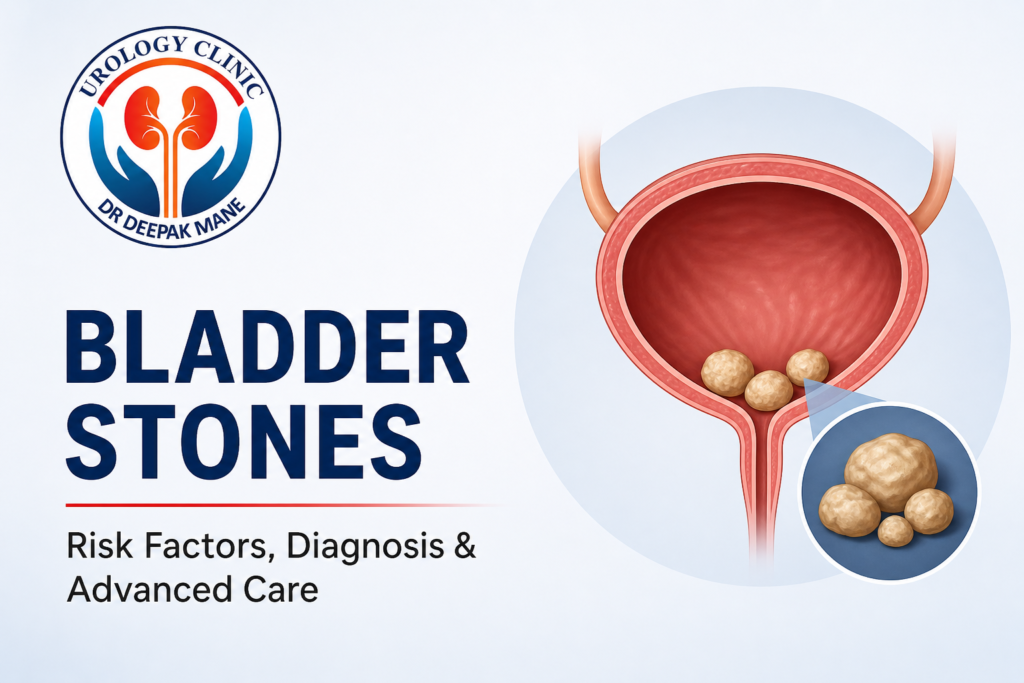
Bladder stones are a common yet often overlooked urological condition that can cause significant discomfort if left untreated. Many people confuse them with kidney stones, but they are quite different in origin and symptoms. If you’ve ever experienced pain while urinating or noticed unusual changes in your urinary habits, your body might be trying to tell you something important.
With expert care from specialists like Dr. Deepakkumar Anandrao Mane, recognized as one of the Best Urologists in PCMC & Pune, bladder stones can be diagnosed early and treated effectively using advanced techniques.
What Are Bladder Stones?
Bladder stones are hard masses of minerals that form in the urinary bladder. They usually develop when urine becomes concentrated, causing minerals to crystallize and stick together.
Think of it like leaving saltwater in a container—over time, the water evaporates, and crystals are left behind. Similarly, when urine doesn’t fully empty from the bladder, these crystals can build up and form stones.
Common Symptoms of Bladder Stones
Bladder stones may not always cause symptoms in the early stages, but as they grow, they can lead to noticeable discomfort.
Key symptoms include:
- Pain or burning during urination
- Frequent urge to urinate
- Difficulty passing urine
- Blood in urine (hematuria)
- Lower abdominal pain
- Cloudy or dark-colored urine
If you notice any of these symptoms, it’s important to consult a urologist promptly.
Risk Factors for Bladder Stones
Bladder stones don’t appear randomly—certain conditions increase the risk of developing them.
Major risk factors:
- Incomplete bladder emptying
- Enlarged prostate (in men)
- Urinary tract infections (UTIs)
- Neurogenic bladder (nerve-related bladder issues)
- Use of catheters
- Dehydration
Men, especially older adults, are more commonly affected due to prostate-related issues.
How Are Bladder Stones Diagnosed?
Accurate diagnosis is the first step toward effective treatment. A urologist may recommend:
- Ultrasound: A quick and painless imaging test
- CT Scan: Provides detailed images of the bladder
- Urine Test: Detects infection or blood
- Cystoscopy: A small camera is used to view the bladder internally
These tests help determine the size, number, and exact location of the stones.
Advanced Treatment Options
The good news is that modern medicine offers highly effective treatments for bladder stones.
1. Cystolitholapaxy (Minimally Invasive)
A common procedure where stones are broken into smaller pieces and removed using a thin instrument.
2. Laser Treatment
Advanced laser technology is used to break stones safely and precisely.
3. Surgery (Rare Cases)
In cases of large stones, surgical removal may be required.
Under the care of experienced specialists like Dr. Deepakkumar Anandrao Mane, these procedures are performed with high precision, ensuring minimal discomfort and faster recovery.
Why Early Treatment Matters
Ignoring bladder stones can lead to serious complications such as:
- Recurrent urinary infections
- Bladder damage
- Urinary retention
- Kidney problems
Early treatment not only relieves symptoms but also prevents long-term damage.
Preventing Bladder Stones
Prevention is always better than cure. Simple lifestyle changes can significantly reduce your risk:
- Drink plenty of water daily
- Avoid holding urine for long periods
- Treat urinary infections early
- Manage prostate issues with medical guidance
- Maintain a healthy lifestyle
Expert Urology Care in PCMC & Pune
When it comes to urological health, experience and expertise matter. Dr. Deepakkumar Anandrao Mane brings over 21+ years of medical experience and 14+ years of specialization in Urology.
Having completed his MBBS from Dr. V. M. Medical College, Solapur, followed by DNB in General Surgery and DNB in Urology from Ruby Hall Clinic, Pune, he is currently serving as an Associate Professor of Urology. His association with multiple reputed hospitals across PCMC and Pune ensures patients receive comprehensive and advanced care.
Known for his patient-first approach, transparent guidance, and modern treatment techniques, Dr. Mane provides safe, effective, and long-lasting solutions for bladder stones and other urological conditions.
When Should You See a Urologist?
You should consult a specialist if:
- You experience pain while urinating
- There is blood in your urine
- You have frequent urinary infections
- You feel incomplete bladder emptying
Timely consultation can prevent complications and ensure faster recovery.
Conclusion
Bladder stones may start small, but their impact can be significant if ignored. Understanding the risk factors, symptoms, and treatment options helps you take control of your health.
With advanced care and expert guidance from specialists like Dr. Deepakkumar Anandrao Mane, patients can achieve quick relief and long-term wellness. Don’t ignore the warning signs—your urinary health matters more than you think.