
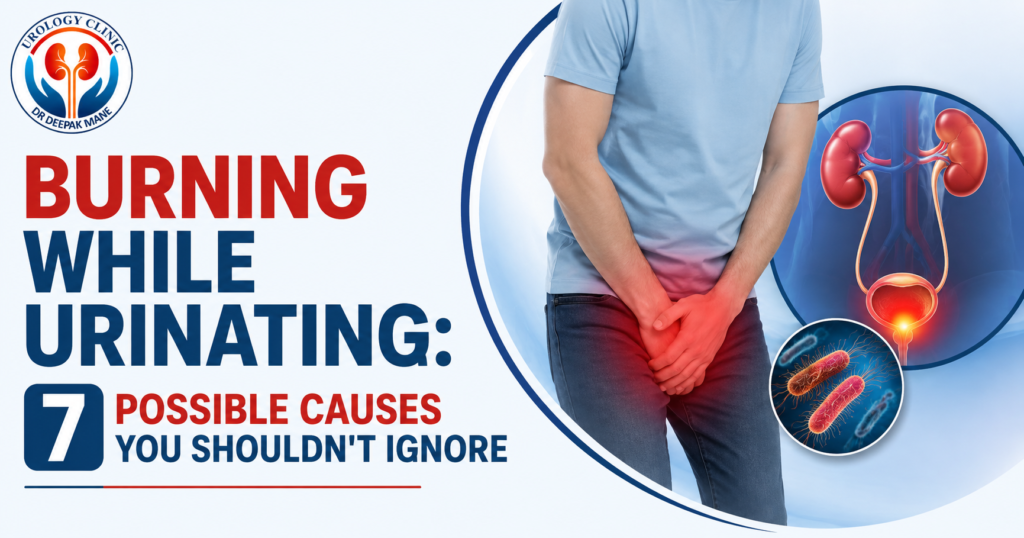
Burning or pain while urinating, medically known as dysuria, is a common symptom that can happen for several reasons. Sometimes it is caused by a simple urinary tract infection, but it can also indicate kidney stones, prostate problems, sexually transmitted infections, or irritation of the urinary tract. If the burning continues, keeps returning, or occurs with other symptoms, it is important not to ignore it.
If you are searching for an Andrologist in Pune & PCMC, remember that urinary symptoms in men can sometimes be related to the prostate or other male reproductive and urinary conditions. A Urologist can help identify the underlying cause and recommend appropriate testing and treatment rather than treating the symptom alone.
1. Urinary Tract Infection
A urinary tract infection, or UTI, is one of the most common causes of burning while urinating. It occurs when bacteria enter and multiply in the urinary tract. A bladder infection is the most common type of UTI.
Along with burning, you may experience frequent urination, a strong urge to urinate, lower abdominal discomfort, cloudy urine, or urine with a strong smell. Some people may also notice blood in their urine.
Women are more likely to develop bladder infections than men, although anyone can develop a UTI. According to the National Institute of Diabetes and Digestive and Kidney Diseases, about half of all women develop a bladder infection at some point in their lives.
A Urologist or other healthcare professional may recommend a urine test and, when appropriate, a urine culture to identify infection and guide treatment. Bacterial bladder infections are commonly treated with antibiotics prescribed by a healthcare professional.
2. Kidney or Urinary Stones
Kidney stones can cause significant urinary symptoms, particularly when a stone moves from the kidney into the ureter. Depending on its location, a stone may cause burning during urination, blood in the urine, frequent urination, or sharp pain in the back, side, lower abdomen, or groin.
The discomfort associated with stones can sometimes be mistaken for a urinary infection. However, the two conditions require different approaches to treatment.
A Urologist may recommend urine testing and imaging, such as an ultrasound or CT scan, depending on the symptoms and suspected stone location. Treatment depends on factors such as the stone’s size, location, symptoms, and whether it is blocking urine flow.
Persistent burning accompanied by severe side or back pain, vomiting, fever, or difficulty passing urine should receive prompt medical attention.
3. Sexually Transmitted Infections
Certain sexually transmitted infections can cause inflammation of the urethra, known as urethritis. Burning while urinating may be one of the first noticeable symptoms.
Depending on the infection, there may also be unusual discharge from the penis or vagina, genital irritation, pelvic discomfort, or pain during sexual activity. However, some sexually transmitted infections can cause few or no symptoms.
If there is a possibility of exposure to an STI, it is important to discuss it honestly with a healthcare professional. Testing can help identify the infection so that appropriate treatment can be provided. Cleveland Clinic notes that STI testing may be considered when dysuria occurs alongside genital discharge or other relevant symptoms.
Avoid taking antibiotics without medical advice because the correct treatment depends on the specific infection.
4. Prostatitis in Men
For men, burning urination can sometimes be associated with prostatitis, which means inflammation or infection of the prostate.
Prostatitis may cause painful or frequent urination, difficulty starting the urine stream, pelvic or genital pain, lower back discomfort, or pain during ejaculation. Acute bacterial prostatitis can also cause fever, chills, nausea, and difficulty urinating.
Because prostate conditions can have different causes, a proper assessment is important. A Urologist may evaluate urinary symptoms, medical history, physical findings, and laboratory test results to determine the most appropriate treatment.
Sudden inability to urinate, particularly when accompanied by fever or severe pain, requires urgent medical evaluation.
5. Vaginal or Genital Irritation
Not every episode of burning while urinating originates from the bladder or urethra. In women, irritation around the vaginal or external genital area can make urine sting when it comes into contact with inflamed skin.
Possible triggers include certain soaps, scented products, spermicides, personal hygiene products, or other irritants. Vaginal infections can also cause symptoms that may feel similar to a urinary problem.
If urine tests do not show a UTI but burning continues, your healthcare professional may consider causes outside the urinary tract. Cleveland Clinic notes that external irritation and vaginal infections can contribute to painful urination in women.
6. Urethritis or Inflammation of the Urinary Tract
Urethritis occurs when the urethra becomes inflamed. Infection is one possible cause, but irritation or trauma can also contribute.
Burning may be felt particularly when urine passes through the urethra. Some people may also experience urinary frequency, discomfort, or discharge.
Identifying the reason for inflammation is important because treatment varies according to the cause. A Urologist may recommend urine testing, STI testing, or other investigations depending on the symptoms.
7. Other Bladder or Urinary Conditions
Persistent burning that does not have an obvious explanation should not simply be ignored. Other bladder or urinary conditions can sometimes produce painful urination.
For example, bladder inflammation can occur without a typical bacterial UTI, while certain urinary medications or medical treatments can irritate the bladder. In men, prostate enlargement or other prostate-related conditions may also contribute to urinary symptoms.
Dysuria is a symptom rather than a diagnosis, so identifying its underlying cause is the key to effective treatment.
When Should You See a Urologist?
A single mild episode may not always indicate a serious condition, but persistent or recurring burning deserves medical evaluation. You should particularly seek medical attention if burning occurs with:
- Fever or chills
- Blood in the urine
- Severe back, side, abdominal, or pelvic pain
- Nausea or vomiting
- Difficulty passing urine
- Unusual genital discharge
- Repeated urinary infections
- Symptoms that keep returning or do not improve
Fever, chills, back or side pain, nausea, and painful urination can indicate a kidney infection. NIDDK advises seeking medical care promptly because an untreated kidney infection can lead to serious complications, including sepsis in some cases.
How Is the Cause of Burning Urination Diagnosed?
The evaluation usually begins with your symptoms and medical history. Depending on your situation, a healthcare professional may recommend:
- Urinalysis to look for signs of infection, blood, inflammation, or other abnormalities
- Urine culture when a bacterial infection is suspected
- STI testing when appropriate
- Blood tests in selected cases
- Ultrasound or other imaging if kidney stones, obstruction, or another urinary problem is suspected
A urinalysis can detect substances and cells that provide clues about urinary tract problems. For example, white blood cells can indicate inflammation or infection, while certain crystals may be associated with kidney stones.
The right treatment depends entirely on the cause. A UTI may require antibiotics, while a kidney stone may require stone-specific treatment. Prostatitis, STI-related urethritis, and noninfectious bladder conditions each require different approaches.
Why You Shouldn’t Ignore Persistent Burning
Burning while urinating is easy to dismiss, especially when the discomfort is mild. However, delaying evaluation can allow some underlying conditions to worsen. For example, a bladder infection can spread to the kidneys if it is not appropriately treated.
It is also important to avoid assuming that every episode of burning is a UTI. Taking antibiotics without confirming the cause may not address the actual problem and can delay appropriate care.
If your symptoms are persistent, severe, recurrent, or accompanied by fever, blood in the urine, significant pain, vomiting, or difficulty urinating, consult a qualified healthcare professional.
Get Expert Urological Care
Dr. Deepakkumar Anandrao Mane provides evaluation and treatment for a range of urinary and urological concerns. If you are experiencing persistent burning while urinating, recurrent urinary symptoms, kidney stone symptoms, or prostate-related problems, consulting an experienced specialist can help identify the underlying cause and guide appropriate treatment.
For patients seeking a Urologist in PCMC & Pune, Dr. Deepakkumar Anandrao Mane offers comprehensive urological evaluation and care tailored to individual symptoms and needs.
Hashtags
#Urologist #UrologyCare #BurningUrination #UTI #UrinaryHealth #KidneyHealth #ProstateHealth #UrologicalCare #PCMC #Pune