Back pain is one of the most common health complaints, but not all back pain originates from the muscles or spine. Sometimes, the real culprit is a kidney stone. Because both conditions can cause pain in the lower back or side, many people struggle to tell the difference and may delay seeking the right treatment.
Understanding the symptoms of kidney stone pain versus ordinary back pain can help you act quickly and avoid complications. If you are looking for expert Kidney stone treatment in Pune, consulting a qualified Urologist can ensure an accurate diagnosis and timely treatment before the condition worsens.
Why Kidney Stones and Back Pain Are Often Confused
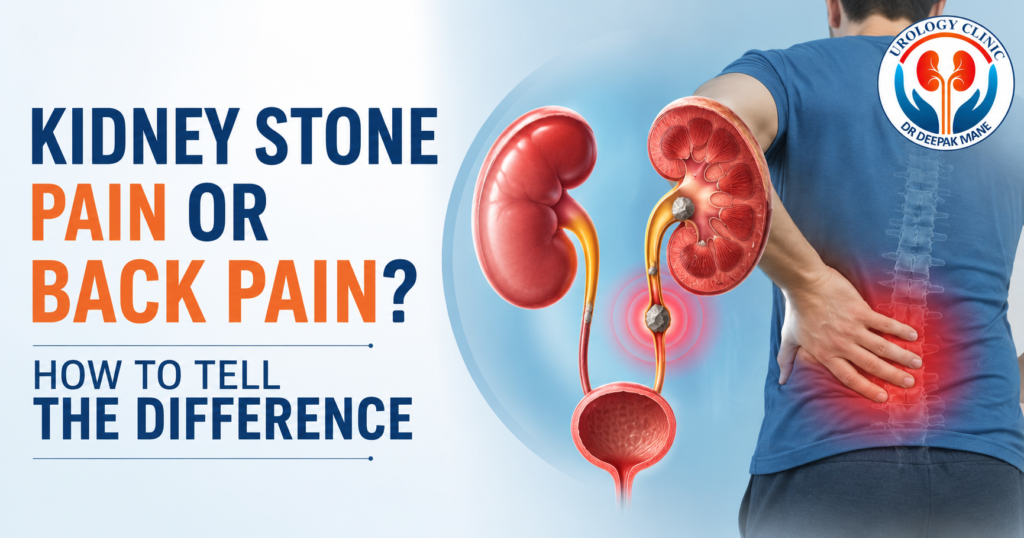
Kidney stones are hard deposits made of minerals and salts that form inside the kidneys. When a stone moves into the ureter, it can block the flow of urine, causing intense pain known as renal colic.
Back pain, on the other hand, is usually related to muscles, ligaments, joints, or the spine. Poor posture, heavy lifting, arthritis, or slipped discs are common causes.
Although both conditions can cause discomfort in the back, their symptoms, location, and severity are usually quite different.
According to the National Institute of Diabetes and Digestive and Kidney Diseases (NIDDK), kidney stones affect about 1 in 11 people during their lifetime, making them one of the most common urinary tract disorders.
Where Does Kidney Stone Pain Occur?
The location of the pain depends on where the stone is within the urinary tract.
Typically, kidney stone pain begins:
- In the side or flank below the ribs
- Around the back near one kidney
- Moving toward the lower abdomen
- Radiating to the groin as the stone travels
Unlike muscle pain, kidney stone pain usually changes location as the stone moves through the urinary tract.
Many patients describe it as one of the most severe pains they have ever experienced.
How Is Back Pain Different?
Back pain usually develops due to strain or injury involving muscles, joints, or the spine.
Common features include:
- Pain in the lower back or upper back
- Pain that worsens with movement
- Muscle stiffness
- Tenderness when touching the affected area
- Relief with rest or posture changes
Unlike kidney stone pain, ordinary back pain usually stays in one location and rarely causes urinary symptoms.
Kidney Stone Pain vs Back Pain: Key Differences
Understanding these differences can help you decide when to seek medical attention.
| Kidney Stone Pain | Back Pain |
| Sudden, severe pain | Gradual or sudden pain |
| Usually starts in the flank | Usually starts in the lower back |
| Pain comes in waves | Pain is often constant |
| May move toward the groin | Usually stays in one area |
| Often associated with urinary symptoms | Usually no urinary symptoms |
| May cause nausea and vomiting | Rarely causes nausea |
A Urologist can use imaging tests and urine analysis to determine the exact cause of your pain.
Symptoms That Suggest a Kidney Stone
Kidney stones often produce symptoms beyond pain.
Common warning signs include:
- Severe pain in the side or back
- Pain that spreads to the lower abdomen or groin
- Blood in the urine
- Burning while urinating
- Frequent urge to urinate
- Cloudy or foul-smelling urine
- Nausea and vomiting
- Fever and chills if infection develops
According to the Mayo Clinic, blood in the urine and pain that changes location are classic signs of a kidney stone.
Symptoms More Likely to Be Back Pain
Most cases of mechanical back pain involve muscles or the spine.
Signs include:
- Pain after lifting heavy objects
- Stiffness in the lower back
- Pain that improves with rest
- Pain that worsens while bending or twisting
- Muscle spasms
- Pain after prolonged sitting
These symptoms generally do not involve urinary problems or severe abdominal pain.
How Is the Diagnosis Made?
Because symptoms sometimes overlap, your doctor may recommend several tests.
These may include:
- Physical examination
- Urine analysis
- Blood tests
- Ultrasound
- CT scan
- X-ray in selected cases
A non-contrast CT scan is considered one of the most accurate tests for detecting kidney stones.
The American Urological Association recommends imaging studies based on symptoms, stone size, and overall health.
When Should You See a Urologist?
Some kidney stones pass naturally, while others require medical or surgical treatment.
You should consult a Urologist immediately if you experience:
- Severe pain that does not improve
- Blood in the urine
- Fever with flank pain
- Persistent vomiting
- Difficulty passing urine
- Recurrent kidney stone attacks
Prompt treatment can prevent infection, kidney damage, and unnecessary complications.
Treatment Options for Kidney Stones
Treatment depends on the size, location, and composition of the stone.
Small stones often pass naturally with:
- Increased fluid intake
- Pain-relieving medication
- Medicines that help relax the ureter
Larger stones may require:
- Extracorporeal Shock Wave Lithotripsy (ESWL)
- Ureteroscopy with laser lithotripsy
- Percutaneous nephrolithotomy (PCNL)
- Minimally invasive surgical procedures
Your Urologist will recommend the most suitable treatment based on your individual condition.
Can Kidney Stones Be Prevented?
Yes. Many kidney stones can be prevented by making healthy lifestyle changes.
Prevention tips include:
- Drink enough water throughout the day.
- Reduce excess salt intake.
- Limit sugary beverages.
- Eat calcium-rich foods in moderation.
- Reduce excessive animal protein if advised.
- Maintain a healthy body weight.
- Follow dietary recommendations based on your stone type.
The Cleveland Clinic recommends staying well hydrated as one of the most effective ways to reduce the risk of future kidney stones.
Final Thoughts
While both kidney stones and back pain can cause discomfort in the back or side, the nature of the pain and accompanying symptoms are very different. Kidney stone pain is typically sudden, severe, and associated with urinary symptoms, whereas back pain often relates to muscle strain or spinal conditions.
Ignoring severe flank pain or blood in the urine can delay diagnosis and increase the risk of complications. If you are unsure about the cause of your pain, it is always safer to seek medical evaluation.
Expert Kidney Stone Care with Dr. Deepak Mane
If you are experiencing severe flank pain, recurrent kidney stones, or urinary symptoms, Dr. Deepak Mane provides comprehensive diagnosis and advanced treatment for kidney stone disease. Using modern diagnostic tools and minimally invasive techniques, he offers personalized care focused on faster recovery and long-term prevention.
If you are looking for an experienced Urologist in PCMC & Pune, Dr. Deepak Mane can help you identify the cause of your symptoms and recommend the most appropriate treatment for lasting relief.
Hashtags
#KidneyStones #KidneyStonePain #BackPain #Urologist #KidneyHealth #UrinaryHealth #KidneyStoneTreatment #UrologyCare #DrDeepakMane #UrologistInPCMCPune #Healthcare #PatientEducation